
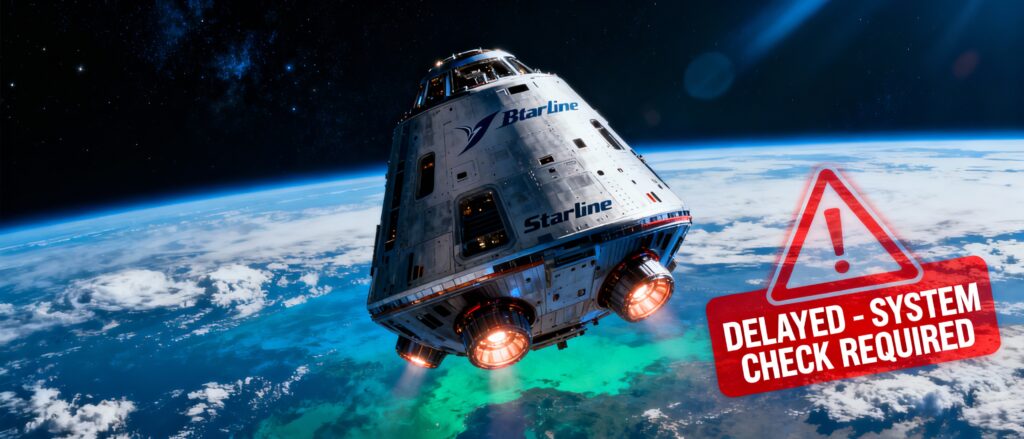
NASA & Boeing Postpone Starliner Astronaut Launch Due to Technical Snags
Another Delay for the Starliner Mission: Here’s What Happened
Just when we thought we were getting closer to another historic mission in space travel, NASA and Boeing have hit pause. The much-anticipated launch of the Starliner spacecraft, which was set to carry astronauts into space, has been delayed again—this time due to technical issues.
If you’re curious about what went wrong and what it means for the future of space exploration, buckle up. We’re breaking it all down in simple, human language.
What Is the Starliner and Why Is It Important?
Before we dive into the delay, let’s first talk about what the Starliner actually is.
Built by Boeing in collaboration with NASA, the Starliner is a spacecraft designed to carry astronauts to and from the International Space Station (ISS). Think of it as NASA’s modern-day “space taxi.” It’s part of NASA’s Commercial Crew Program—a mission to work with private companies to transport astronauts into low Earth orbit.
Now, you may be wondering, don’t we already have a spacecraft doing that? Great question!
SpaceX’s Crew Dragon has been doing the job since 2020. But NASA always planned on having two different spacecraft for redundancy—just like how you wouldn’t rely on only one airline for all flights. Boeing’s Starliner was supposed to be that second option.
So, when delays hit, it’s a big deal.
Why Did NASA and Boeing Delay the Launch This Time?
Originally scheduled for June 1, the Starliner launch was called off once again. This time, two main issues were at play:
- A helium leak in the spacecraft’s propulsion system
- Concerns about potential software and hardware interactions with the propulsion system that might affect flight safety
Let’s break that down a bit.
First, the helium leak: Helium is used to pressurize the fuel tanks in the spacecraft. A leak means less pressure. And less pressure could affect how the engines fire in space—which could be risky during docking or re-entry.
Then there’s the hardware/software issue: Basically, engineers discovered a potential glitch in how the onboard software interacts with the propulsion valves. If something doesn’t talk to something else the right way in space, that could lead to serious problems.
Safety First—Always
If you’ve followed space news for a while, you’ve probably noticed that NASA errs on the side of caution. And for good reason—human lives are at stake.
While delays are frustrating, they actually show us that the spaceflight team is being thorough. As Steve Stich, manager for NASA’s Commercial Crew Program said, “We’ll launch when we’re ready.”
That mindset—double-checking every nut and bolt, every line of code—might just save lives. It’s a little like making sure your car’s brakes work before a road trip, except this road trip is 250 miles straight up.
Who Was Supposed to Fly on the Mission?
This launch wasn’t just about testing wires and engines. There were real people scheduled to fly aboard the Starliner.
Boeing’s first crewed flight test would have carried NASA astronauts:
- Butch Wilmore
- Sunita Williams
Both are experienced astronauts, and this mission would’ve marked a major milestone—not just for Boeing, but for NASA and the future of commercial spaceflight.
Instead of blasting off into the stars, these two are now in launch delay limbo. For now, they stay grounded while engineers work day and night to fix the problems.
Looking at the Bigger Picture
Now here’s the million-dollar question: What does this mean for the future of the Starliner program?
For Boeing, each delay adds pressure. This isn’t the first hiccup for Starliner. If you remember, the uncrewed test flight in 2019 had major software issues that prevented the capsule from docking with the ISS. Since then, Boeing has been trying to prove that the Starliner is safe and reliable enough for human space travel.
And for NASA? Having two working spacecraft under the Commercial Crew Program is still critical. Redundancy ensures missions to the ISS continue—even if something goes wrong with one vehicle.
So, while this delay is a step back, it doesn’t spell doom. Programs like this are designed to expect the unexpected.
When Can We Expect a New Launch Date?
As of now, there’s no confirmed reschedule date. NASA and Boeing are conducting thorough reviews and testing.
But here’s what we do know:
- The spacecraft is safe and remains on the launch pad at Cape Canaveral
- NASA will not proceed until every issue is investigated and resolved
- Engineers believe the fixes needed are “manageable,” not major overhauls
That’s good news, even if it means more waiting.
The Reality of Rocket Science
You’ve probably heard the old saying, “It’s not rocket science”—except in this case, it is.
Space missions are incredible feats of engineering. Think about it: You’re building machines that leave Earth, operate flawlessly in zero gravity, dock with another orbiting lab, and eventually return safely. One tiny mistake could have major consequences.
So, while delays like this feel disappointing, they remind us just how difficult—and worthwhile—space exploration really is.
Final Thoughts: Patience Pays Off in Space
In the end, it’s all about perspective.
Yes, the Starliner mission was delayed. Again. But the rocket didn’t explode. No astronauts were harmed. And the team is taking every precaution to ensure that, when Butch and Sunita eventually ride Starliner, the mission will be smooth, safe, and successful.
So, what can we learn from all this?
- Space travel is hard.
- Teamwork between NASA and commercial partners is critical.
- Delays are not failures—they’re safeguards.
As we wait for the next big announcement from NASA, let’s keep an eye on the skies and remember: sometimes the best things are worth waiting for.
Keywords used: NASA Starliner delay, Boeing Starliner launch, commercial crew program, space mission postponed, astronaut launch delayed, NASA Boeing spacecraft
What Do You Think?
Do you think these repeated Starliner delays are hurting confidence in Boeing, or are they just part of the spaceflight learning curve? Let me know your thoughts in the comments below!
And hey, if you loved geeking out about space with us, don’t forget to share this post and subscribe for more cosmic content!
Stay curious, stay inspired 🚀